
"coffee cultivation milestones"
70 article(s) found

The Green Dream of Yunnan Coffee
In 2012, Yunnan is expected to produce 60, 000 tons of coffee, accounting for 98% of the country's coffee production and 7/1000 of the world's coffee production. Pu'er City, as an important producing area of small grain coffee in Yunnan, by the end of 2011, the planting area of coffee is 439000 mu, the output is 28000 tons, the output value is 850 million yuan, the planting area and output account for more than half of the country respectively. This year, new plants will be planted in Pu'er City.
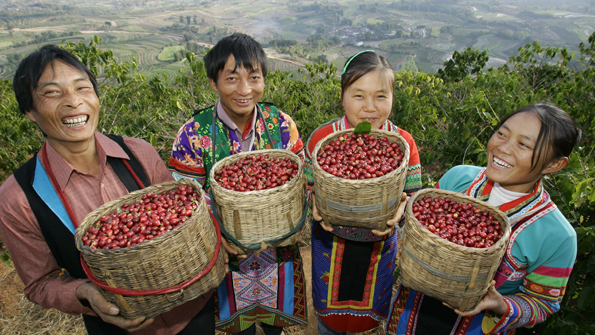
The green dream of Yunnan coffee is the only way to take intensive processing, and join the competition of international coffee giants.
Yunnan coffee was planted on a large scale in the mid-1950s, with a planting scale of 4000 hectares at one time. By the end of 1997, the planting area of coffee in the province had reached 7800 hectares. At present, the planting area of the province accounts for 70% of the national area, and the output accounts for 83% of the whole country. Yunnan coffee has established the dominant position in China in terms of planting area and coffee bean production. At present, Pu'er City is still there.
The Green Dream of Coffee in Yunnan Coffee planting Environment in Yunnan
Abstract: introduction: outshining others is not spring. In order to make great progress in Yunnan coffee industry, intensive processing is the only way, and in the face of competition from international coffee giants, Yunnan coffee needs the effect of industrial clusters more. And this will be the situation that zhengfu likes to hear and see. In 2012, Yunnan coffee output is expected to be 60,000 tons, accounting for 98% of the national coffee output, accounting for the world.

Coffee: What is a "fine" and what is a "single"?
Professional coffee knowledge exchange More coffee bean information Please pay attention to coffee workshop (Weixin Official Accounts cafe_style) What is "fine" and what is "single product"? Coffee drinkers remained mostly refreshers throughout the long history of human consumption, and this use did not change until the second half of the 20th century. Because the economic level has improved and life has been driven
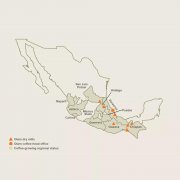
Starbucks 9th FSC Chiapas, Mexico| Mexico Coffee Region Introduction
Mexico is located at the northern end of Central America, bordering the United States in the north, the Pacific Ocean in the south and west, the Caribbean Sea in the southeast, Belize and Guatemala, and the Gulf of Mexico in the east. It is the fourth largest coffee producer in the world and a major organic coffee producer with an annual output of about 5 million bags of coffee. Most of its coffee is produced by nearly 100,000 smallholder farmers, who once controlled coffee.

A list of Mexican Coffee Manors in Mexico
For more information on coffee beans, Coffee Workshop (Wechat official account cafe_style) Mexico is located at the northern tip of Central America, bordered by the United States to the north, the Pacific Ocean to the south and west, the Caribbean Sea to the southeast, Belize and Guatemala, and the Gulf of Mexico to the east. It is the fourth largest coffee producer in the world and a big producer of organic coffee.

Introduction of Mexican Coffee Fine Coffee beans recommended by Mexican Coffee Manor
For more information on coffee beans, Coffee Workshop (Wechat official account cafe_style) Mexico is located at the northern tip of Central America, bordered by the United States to the north, the Pacific Ocean to the south and west, the Caribbean Sea to the southeast, Belize and Guatemala, and the Gulf of Mexico to the east. It is the fourth largest coffee producer in the world and a big producer of organic coffee.

An exclusive interview with Starbucks Chairman Howard Schultz
Mr. Howard Schultz, chairman of Starbucks, joined Starbucks Coffee as director of operations and marketing in 1982, when the company had only four branches. In August 1987, Mr. Howard Schultz bought Starbucks Coffee. In June 2000, Mr. Schultz, who was already chairman, began to serve concurrently as the company's chief global strategy.

Sun coffee beans ten questions ten answers_Sun coffee beans advantages and trends_Sun coffee beans good?
Professional coffee knowledge exchange More coffee bean information Please pay attention to coffee workshop (Weixin Official Accounts cafe_style) ● So the first question is, can you talk about the method of processing coffee beans in sun-dried coffee? A: Of course, I always do. But if I use wine or other drinks as an analogy, it is somewhat similar, but not
Coffee bean certification body 4C Association Coffee Certification
4C certification is a widely accepted management rule in the world, which involves the sustainable development of coffee cultivation, production, processing and other aspects of the supply chain, including social, environmental and economic principles. Coffee practitioners are required to protect biodiversity, protect all kinds of national endangered animals and plants, correctly use and handle pesticides and other chemicals, protect the natural environment and
Quality coffee bean certification organization 4C Association Coffee Certification
4C certification is a widely accepted management rule in the world, which involves the sustainable development of coffee cultivation, production, processing and other aspects of the supply chain, including social, environmental and economic principles. Coffee practitioners are required to protect biodiversity, protect all kinds of national endangered animals and plants, correctly use and handle pesticides and other chemicals, protect the natural environment and
Certificate of boutique coffee 4C coffee certification
C certification is a widely accepted management rule in the world, which involves the sustainable development of coffee cultivation, production, processing and other aspects of the supply chain, including social, environmental and economic principles. Coffee practitioners are required to protect biodiversity, protect all kinds of national endangered animals and plants, correctly use and handle pesticides and other chemicals, and protect the natural environment and people.
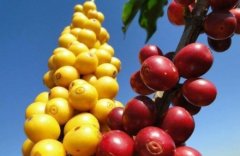
Boutique coffee bean knowledge 4C coffee certification
4C certification is a widely accepted management rule in the world, which involves the sustainable development of coffee cultivation, production, processing and other aspects of the supply chain, including social, environmental and economic principles. Coffee practitioners are required to protect biodiversity, protect all kinds of national endangered animals and plants, correctly use and handle pesticides and other chemicals, protect the natural environment and
Basic knowledge of boutique coffee 4C Coffee Certification
4C certification is a widely accepted management rule in the world, which involves the sustainable development of coffee cultivation, production, processing and other aspects of the supply chain, including social, environmental and economic principles. Coffee practitioners are required to protect biodiversity, protect all kinds of national endangered animals and plants, correctly use and handle pesticides and other chemicals, protect the natural environment and
Boutique coffee bean certification body 4C Association coffee certification
4C certification is a widely accepted management rule in the world, which involves the sustainable development of coffee cultivation, production, processing and other aspects of the supply chain, including social, environmental and economic principles. Coffee practitioners are required to protect biodiversity, protect all kinds of national endangered animals and plants, correctly use and handle pesticides and other chemicals, protect the natural environment and
4C Coffee Certification, the certification body of boutique coffee beans
4C certification is a widely accepted management rule in the world, which involves the sustainable development of coffee cultivation, production, processing and other aspects of the supply chain, including social, environmental and economic principles. Coffee practitioners are required to protect biodiversity, protect all kinds of national endangered animals and plants, correctly use and handle pesticides and other chemicals, protect the natural environment and
Introduction to the certification body of fine coffee beans 4C coffee certification
4C certification is currently widely accepted in the world, involving coffee cultivation, production, processing and other aspects of the supply chain sustainable development management rules, including social, environmental and economic principles. Coffee growers are required to protect biodiversity, protect various nationally endangered plants and animals, properly use and handle pesticides and other chemicals, protect the natural environment and
Dangerous drinks: how Coffee creates a Culture of Resistance
Professional coffee knowledge exchange more information about coffee beans please follow the coffee workshop (Wechat official account cafe_style) Coffee as a "Drug" David. In his book five hundred years of Addiction, David T. Courtwright tries to define the English word "Drug" as a neutral concept: "addiction", that is, all addictive or addictive.
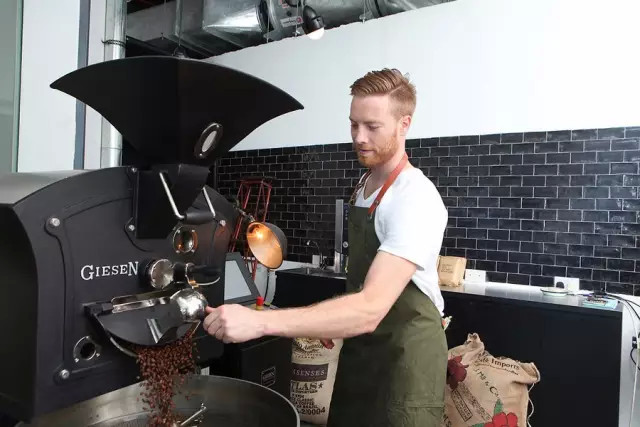
What 4c certification? 4c certification of coffee
4C coffee certification is a development trend. 4C certification is a widely accepted management rule in the world, which involves the sustainable development of coffee cultivation, production, processing and other aspects of the supply chain. This article is based on the translation of FAQ on 4C Coffee Certification provided by 4C website. It is for reference only. If there is anything unclear, please refer to the original text of 4C website. 1. 4C organization related brief answer 1.

Learn about coffee 4C Association Coffee Certification details
4C certification is a widely accepted management rule in the world, which involves the sustainable development of coffee cultivation, production, processing and other aspects of the supply chain, including social, environmental and economic principles. Coffee practitioners are required to protect biodiversity, protect all kinds of national endangered animals and plants, correctly use and handle pesticides and other chemicals, protect the natural environment and